The Open Meeting Myth: What Participation Can and Cannot Do
The open meeting myth confuses attendance with influence. Learn how to make a focused public comment, find the right channel, and follow up effectively.

The most common open meeting mistake is assuming that showing up once means a decision-maker must change course. That open meeting myth can cost you a useful chance to shape the conversation: you may speak at the wrong point, miss a written-comment window, or leave without a practical next move. Participation works better when you know what you want to contribute and how the public body accepts it.
A council, school board, planning commission, transit agency, or neighborhood advisory group may each offer a different way to take part. The local rules determine whether you can speak, submit a written comment, join remotely, or request a future discussion.
A focused public comment is easier to use
A public comment period can give residents a chance to share a concern without turning the meeting into a back-and-forth conversation. Officials may be listening while following an agenda, considering staff advice, or waiting for a later point in the process.
Before you speak, check whether comments must relate to agenda items, whether you need to sign up, and whether written remarks are accepted. Then prepare one local detail and one clear request. “Please ask staff to review the crossing near the library entrance” gives listeners a specific issue to understand; “Fix the whole intersection” leaves the request broad.
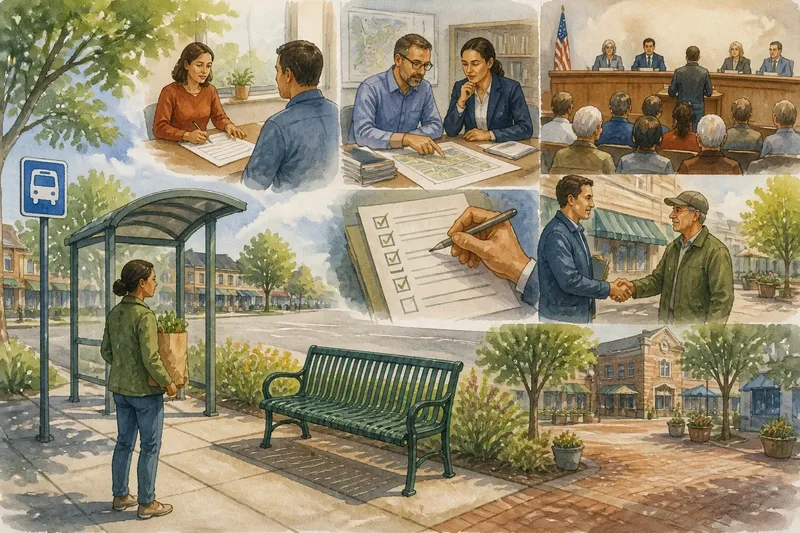
Say you are concerned that a bus stop near a senior center is difficult to reach. You could note that the sidewalk ends before the stop and ask the transit agency which office handles pedestrian access. The expected result is a clearer contact or review route, not an immediate construction decision.
Keep your remarks short enough to deliver comfortably, and bring a written copy if that helps you stay on track.
Choose a channel that fits the issue
The issue may not appear on the meeting agenda, or the public body may not accept general comments. In either case, the meeting is not your only option. Check the notice, agenda, and official website for the right contact, submission method, or process for requesting a future agenda item.
A service problem may belong with a department, while a proposed policy may go to a board or commission. If you are unsure, ask the clerk or organizer which office handles the concern and whether your message can be forwarded.
Imagine you want a safer walking route to a community center, but the agenda is limited to a budget amendment. If general comments are allowed, you might ask who handles pedestrian access; otherwise, you could send the location and concern to the relevant public works contact. The expected result is a named office or next procedure, rather than an immediate change to the route.
A brief note with the location, the problem you observe, and the action you are requesting is easier to direct than a long message covering several concerns.
Make participation accessible to you
A formal room, a speaking timer, or unfamiliar terminology can make it hard to contribute. You can write a few sentences in advance: name the issue, describe its local effect, and say what response or action you are asking for.
If speaking is uncomfortable, check whether the body accepts written comments or offers remote participation. For interpretation or other access needs, contact the meeting organizer ahead of time when possible and confirm the options in the posted notice.
If someone has already made your point, you can add a distinct detail rather than repeat the same argument. A short written submission may also help ensure your specific concern is available to the people reviewing the matter.
Respond to proposals with a specific concern
A proposal may arrive with staff analysis or a draft recommendation already attached. Instead of making a broad objection, identify an assumption, local impact, or alternative that the proposal has not addressed.
Read the supporting material and note the exact point you want clarified. A route map might omit a school entrance; a draft schedule might leave out a community program. Ask a question that makes the missing consideration clear, then suggest an option the body could examine.
Imagine a library committee is considering shorter evening hours, and its proposal discusses staffing but not adult education classes that use the meeting room. You could ask whether those classes were included in the review and suggest checking their schedule before setting the hours. The expected observable result is an answer or consideration of that issue, not a required change to the proposed hours.
When you suggest an alternative, acknowledge a practical trade-off you can see. That helps keep the discussion centered on choices the body can realistically consider.
Keep track of your contribution and any response
After participating, note the meeting date or submission date, the issue, your request, and any response or referral. Check the public body’s website or contact the clerk to learn when minutes, recordings, or written replies may be available.
If the issue is referred to staff, follow the route you were given and send a brief inquiry if the expected response does not arrive. If you are directed to another office, ask for its name and contact details so you can make the next request clearly.
- Check the agenda for a general-comment period; if it is listed, prepare a brief comment, and if it is absent, ask how to submit your concern another way.
- Check whether speakers must sign up; if advance registration is required, follow the stated process, and if it is unclear, contact the clerk before the meeting.
- Check whether written comments are accepted; if they are, send your focused request through the listed channel, and if they are not, ask which other contact handles the issue.
- Check whether remote participation is offered; if it is, follow the access instructions, and if it is not, ask about written submission or another accessible option.
- Check whether your issue falls within the body’s remit; if it does, direct your request there, and if it does not, ask for the responsible office or agency.
- Check whether the supporting documents address your local concern; if they do, refer to the relevant point, and if they do not, name the missing information and ask whether it can be considered.
- Check for a stated follow-up contact or process; if one is given, use it and note the response, and if none is given, ask the clerk who can provide the next update.
What should you expect from a public meeting?
Does speaking at a meeting require officials to adopt my request?
No. Speaking gives you a chance to share a view or question, but the body’s authority and local rules determine what it can do and what response is required.
Can a public comment affect a proposal?
A relevant concern, useful local detail, or overlooked option may inform the discussion. The authorized person or body remains responsible for deciding what to do.
What can I do if I cannot attend in person?
Check the meeting notice for written submissions, remote access, or other participation options. If the instructions are unclear, ask the clerk or organizer how comments are accepted.
How can I tell what happened after I commented?
Look for a reply, referral, or update from the public body, and check its official records when available. If no next step is clear, contact the clerk or named office with a brief question about the status of your request.
Open meeting participation works through clear contributions
The open meeting myth makes attendance sound like the whole of participation. A more useful goal is to make one relevant contribution through a channel the public body recognizes, then use any response or referral to decide what to do next.
Before you take part, decide whether you want to share local information, ask for a review, or identify the office responsible for an issue. That specific aim helps you choose what to say and makes it easier to recognize a useful response, even when the eventual decision is not yours to make.
Keep the agenda or submission instructions handy when you follow up. A small, well-directed question can keep your concern moving toward the person best placed to address it.